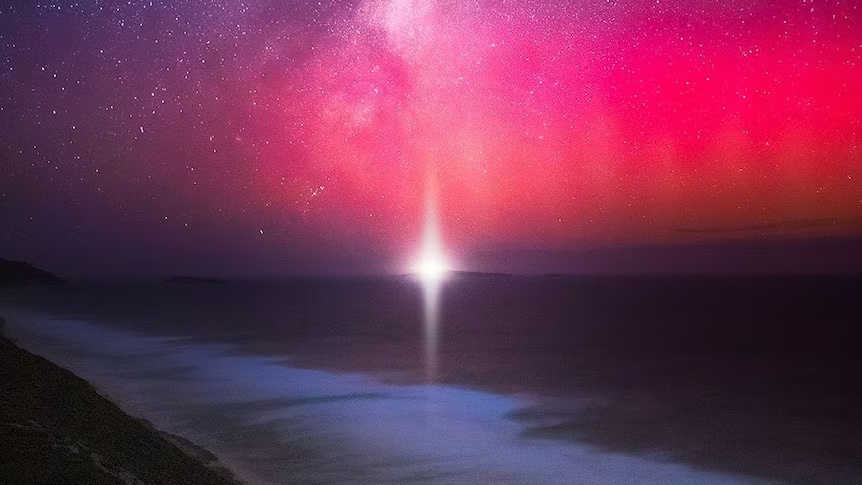
Well, here we are into the last month of 2023 and 2024.
What’s in store for 2024? well, the first important thing is the know that it will be a leap year…..yeah, how exciting ….how will deniers of daylight saving doesn’t fade the curtains handle this.
Anyway, I digress ….To be a leap year, the year number must be divisible by four – except for end-of-century years, which must be divisible by 400, as an example 1900 wasn’t a Leap Year but the fearful 2000 ways.
The first leap year was in 46BCE courtesy of Julius Caesar and aptly called the Julian Calendar. Before that time, the Roman calendar had 355 days and needed a couple of days every second year to continue a cycle that fitted into certain festivals and religious ceremonies.
But, by 1582 the calendar still needed tweaking a little and one fowl swoop Pope Gregory XIII removed 10 days and the Gregorian calendar was introduced supposedly fixing the problem. Problem solved? No, we still need leap seconds which are added when needed, the last was 2017 and the next could be June 2024.
It would be nice if the time it took for us to orbit the sun was 365 days and not what it actually is 365.25 and then all would be good.
One can start evening viewing half an hour after sunset with Mercury sitting 12 deg. above the WSW horizon. At the same time, just quickly take a moment to scan across an arc upwards and over to the NE to (possibly) see Saturn, but almost definitely Jupiter.
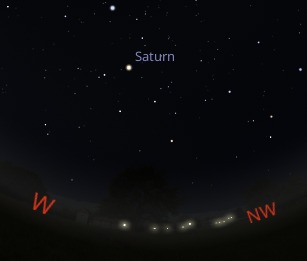
Once its dark, say 8.50pm, cast your gaze to 40 deg. midway between West and WNW to find the golden Saturn; it sets in the WSW by midnight.
Then, by 9.30pm look eastwards to 45 deg. above due North and you cannot miss the diamond glow of Jupiter; it sets in WNW by 3am.
By now, the Summer constellation of Orion will be clearly visible in the ENE and 30 deg. up and an all-night object for binoculars, don’t forget, it’s upside down in the Southern Hemisphere of you are from the Northern Hemisphere.
Morning viewers or risers are still blessed by the brilliant Venus popping over the eastern horizon by 3am., watch the Moon sidle towards it by Friday and closer by the weekend.
December came from the Latin word ‘decem’ which means ten, when our calendar had ten months in it….what, another issue with the calendar? yep….even Climate Change and a Changing Climate are impacting it……seasons no longer really start and finish as they did 20 years ago…but that’s another story and you can discuss with me with my upcoming DrC’s opinion blog in the new year, stay tuned.



 Astronomy West
Leave a comment