
Wow, it’s nearly a quarter of the way through the year already.
Closing out a leap year February, fun fact, some countries such as Persia/Iran and Afghanistan don’t have leap days per say, because their calendar is not based upon math but the timing of the vernal equinox making their calendars extremely accurate; the intricacies of the Hindu lunisolar calendar has leap days and months that can be added or removed as needed, one almost has to have a PhD to work it out 🙂
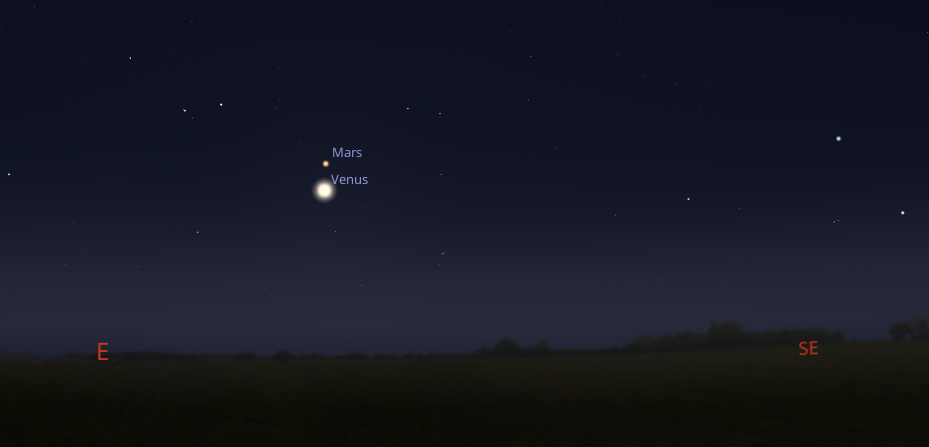
The dulcet hued planet Mars and the brilliant beacon of the planet Venus dominate the pre sunrise East to ESE horizon (10 deg. up at 5am) and they gradually separate as the week progresses.
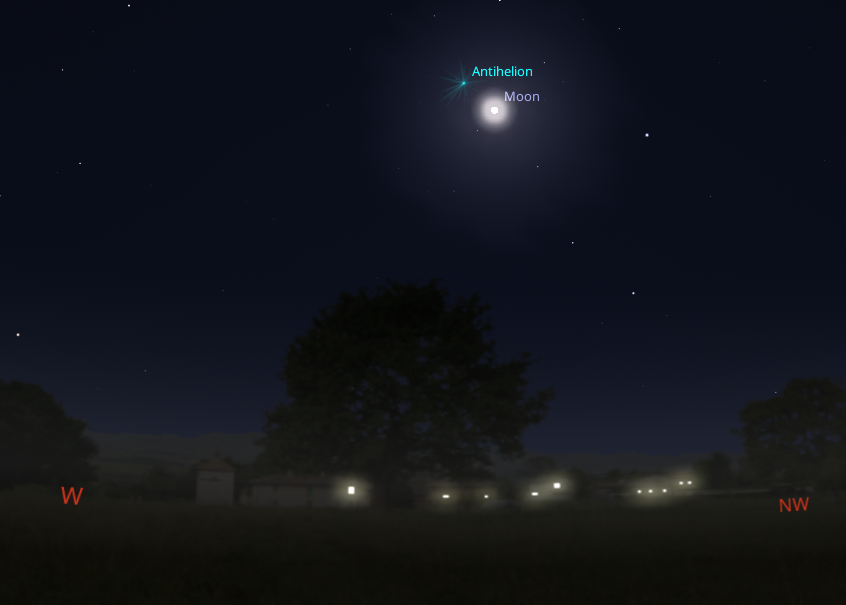
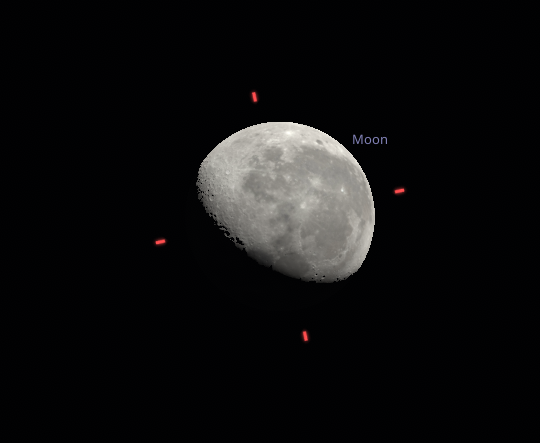
Now, as the weather starts changing and those pesky clouds making observing most objects a challenge, starting tomorrow, follow the just past Full Moon from the WNW to Friday’s 70 deg. almost due North in binoculars. Comparing last week’s lunar viewing see how the lunar features are washed out and most of the shadows are gone, but remember, while donning sunglasses may attract strange looks from friends and neighbours, it opens up a new world of the Moons features; different types of sunglasses can alter it again.
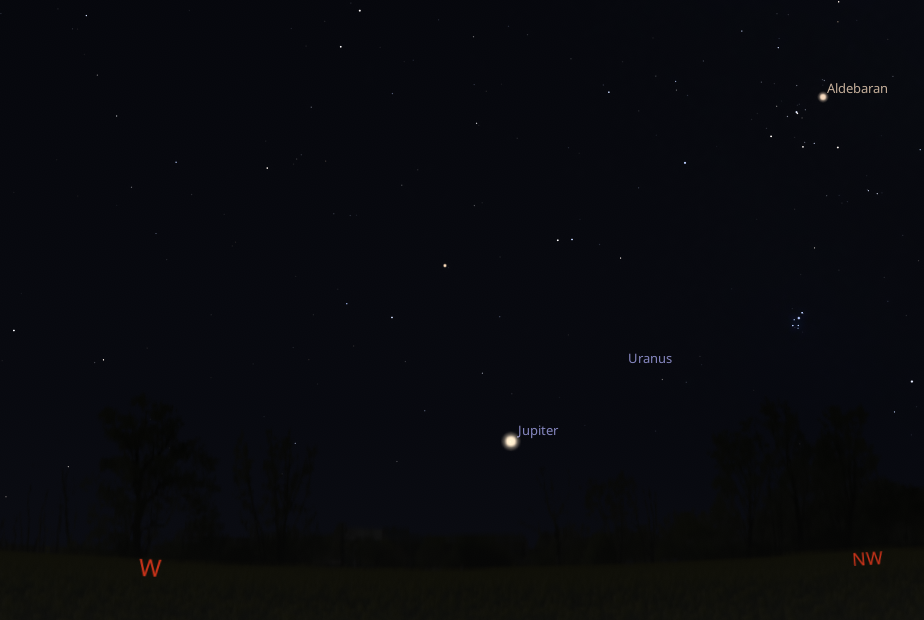
For evening viewers, the mighty superior planet Jupiter sits alone as the 10 deg. above the WNW by 9pm. While it is low to the horizon, the mini solar system of 4 bright moons in binoculars over a week can still entertain the kids.
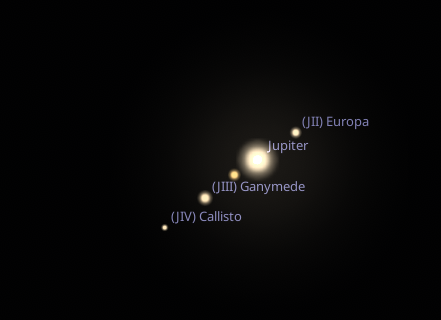
Speaking of the kids or grandchildren, why not buy them a small hardback notebook and pencil to record (and sketch) their night-time observations – planets, meteors, satellites, the Moon, astronomy needs more boys and girls, the pay isn’t great, but the potential discoveries could be ‘Einstein-ional’ (my word).
Quiz night answer, the moons of all the Solar System planets total 294, Jupiter’s Ganymede is the largest at 5262km (bugger than Mercury of Pluto !), Mars’s Deimos the smallest at 6km.
Dr Craig Bowers MP8138.
All night sky screenshots are courtesy of Stellarium planetarium
Zotti, G., Hoffmann, S. M., Wolf, A., Chéreau, F., & Chéreau, G. (2021). The Simulated Sky: Stellarium for Cultural Astronomy Research. Journal of Skyscape Archaeology, 6(2), 221–258. https://doi.org/10.1558/jsa.17822
 Astronomy West
Leave a comment