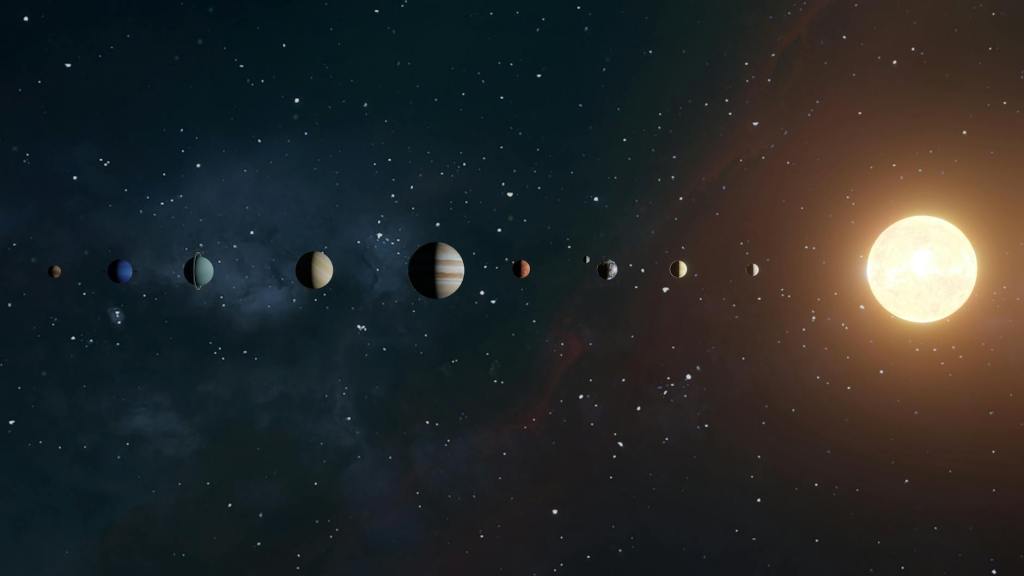
Well, we’ve lost the eastern skies planet Mercury to superior conjunction (Mercury-Sun-Earth) which means as an inferior planet it will reappear again in the evening skies next month and this apparition will be a corker, so get set for it.
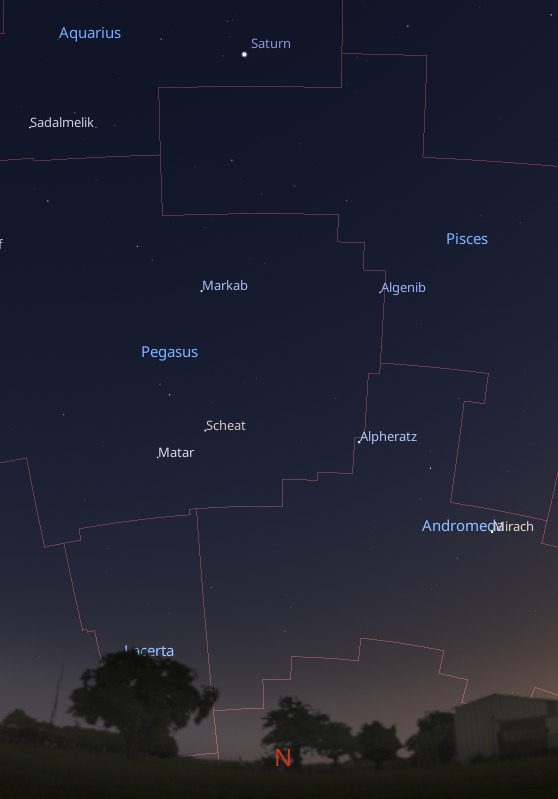
With the evening skies still wanting of early or late planet observing opportunities, the earliest orb to be visible is Saturn, just past midnight, when it will pop over the eastern horizon; by 3.30am it will be 40 deg. above the ENE and 65 deg. above due north by 6.30am.


If you have decided to make it an all-nighter, by 4am Mars would have appeared over the ENE and by 6.30am will be 35 deg. above the NE.


At the same time one would have to be blind not to see the beaming planet Jupiter reappearing to our observing opportunities around the ENE. While Jupiter is quite low in the sky and a bit fuzzy die to the atmosphere, a pair of binoculars will still present a view of its 4 bright moons.
All moons in our solar system are named, apart from ours, the Moon. In total, the 8 solar system planets have 288 moons, with Saturn and Jupiter having 241 between them. If you take into account dwarf planets, which include poor old Pluto, Ceres, Haumea, Makemake and Eris, then the total is 297.
Speaking of moons, the Moon is at first quarter at 1.18pm on Friday and with tripod mounted binoculars a treat to look at during the day; at that time it will sit 10 deg. above the East to ENE.

Dr Craig Bowers MP8138
All night sky screenshots are courtesy of Stellarium planetarium
Zotti, G., Hoffmann, S. M., Wolf, A., Chéreau, F., & Chéreau, G. (2021). The Simulated Sky: Stellarium for Cultural Astronomy Research. Journal of Skyscape Archaeology, 6(2), 221–258. https://doi.org/10.1558/jsa.17822
 Astronomy West
Leave a comment