
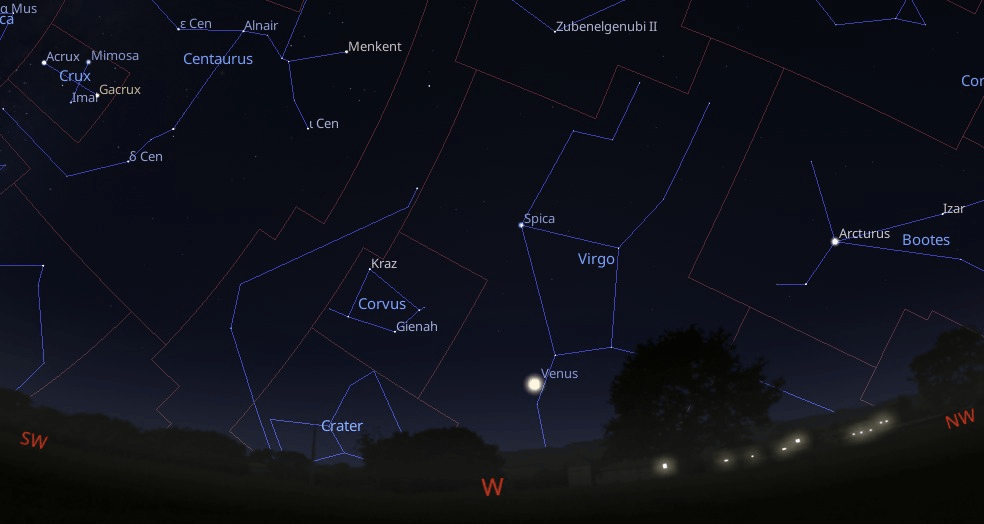
By a very sociable 7pm on Wednesday, find a clear West to East horizon vantage point, it could be the beach, the scarp or goldfields paddock. With the kids or grandchildren in tow, you should have no problem finding the brilliant bule white orb or the planet Venus, sitting 10 deg. above the West horizon.
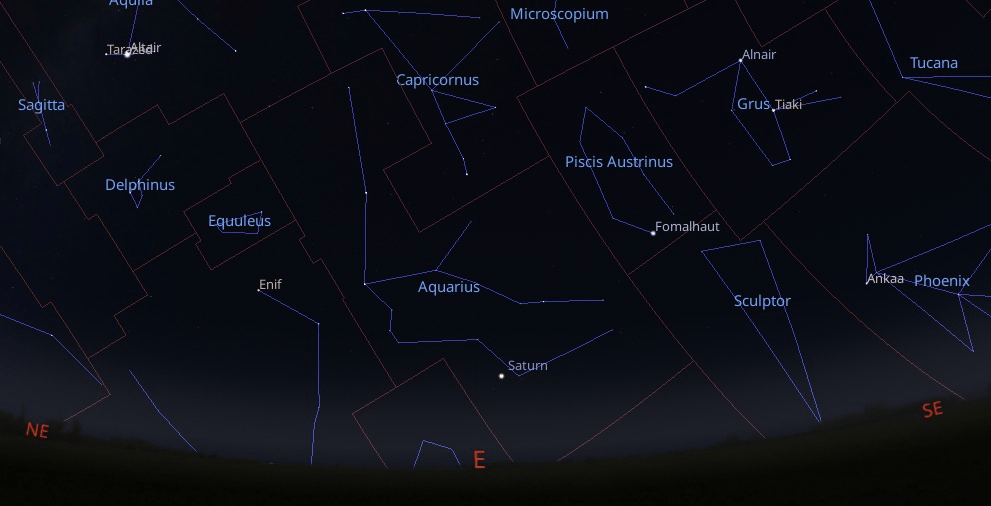
Now, flip your noggin 180 deg. to the East to find the fainter, but unmistakable golden hue of Saturn, also 10 deg. up.
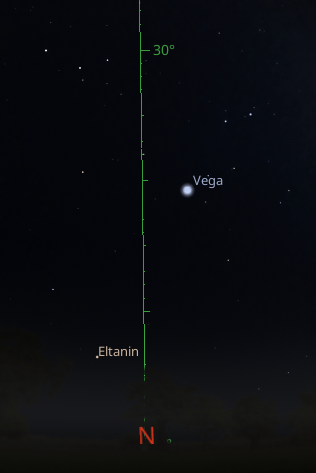
Now, and there’s no chiropractic charge for this, look back to almost due north and 20 deg. up to find the bright star Vega, which is always discussed, not for its properties: 5th brightest star in the night sky, one of the closest stars to Earth, but, how to pronounce its name is the topic; VEE-guh or VAY-guh or even WE-guh?
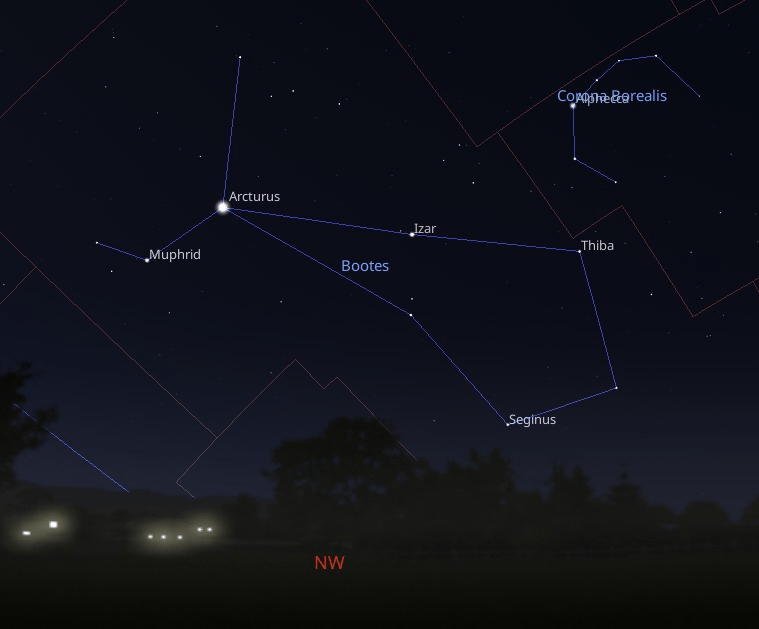
From here, moving one’s gaze back towards Venus, stop 20 deg. above the NW horizon to find the orange star Arcturus, the 4th brightest star in the night sky.
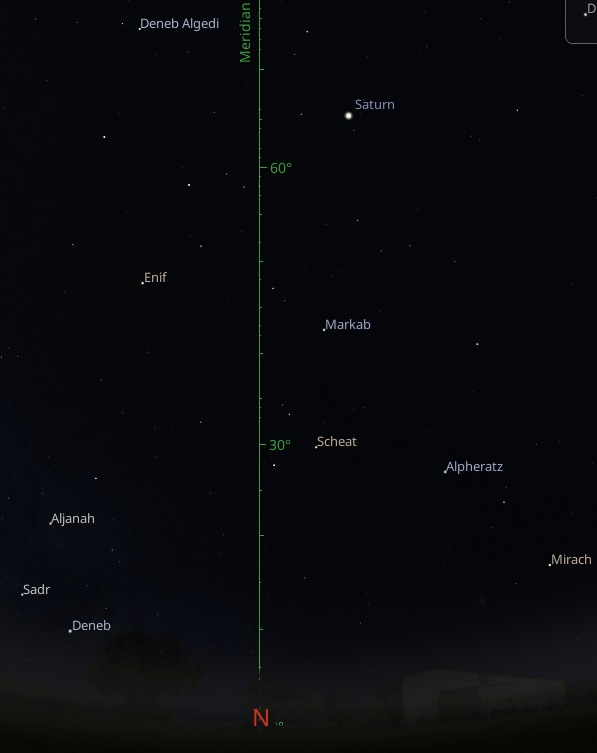
If you are out and about around midnight, Saturn will sit 65 deg. above due north.
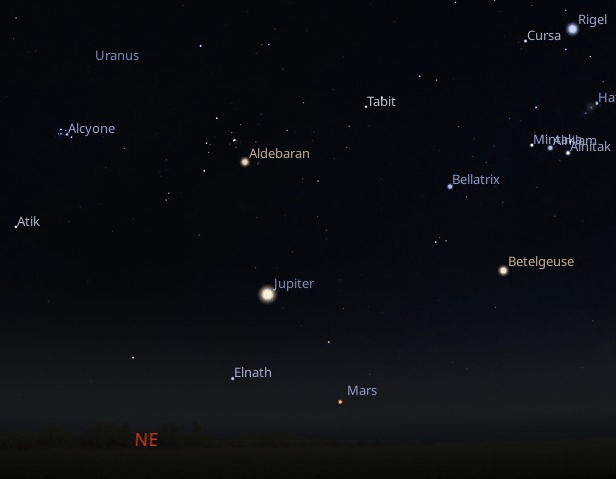
For those returning from clubbing around 2.30am, look through those bleary eyes, to midway between NE and ENE to find Jupiter rising, and if the room stops spinning by 3.30am, a fainter red Mars will appear in the same position, but red eyes and a red planet may be a challenge. If you have a headache…….go to bed.
With the approaching change in weather ie warmer nights, parents and grandparents should consider joining the American Amateur Variable Star Organisation www.aavso.org with their kids or grandkids; it has Australian branches. Observing naked eye, or binocular, stars that change brightness over time is a great pastime as well as educational in reading, writing and arithmetic.

Dr Craig Bowers MP8138.
All night sky screenshots are courtesy of Stellarium planetarium
Zotti, G., Hoffmann, S. M., Wolf, A., Chéreau, F., & Chéreau, G. (2021). The Simulated Sky: Stellarium for Cultural Astronomy Research. Journal of Skyscape Archaeology, 6(2), 221–258. https://doi.org/10.1558/jsa.17822
 Astronomy West
Leave a comment